Sun, Sea & Ink: How to Protect Your New Tattoo Under the Hoi An Sun
Tattoo aftercare written for a European autumn does not work in central Vietnam. Here it is 30 °C with humidity that regularly sits above 80%, you are sweating all day, the sea is a five-minute walk away, and the sun is strong enough to burn healing skin in twenty minutes. Protecting a new tattoo here is a different job from protecting one at home — and the same sun that can ruin the first fortnight is also the thing that will decide how the piece looks in ten years.
The short answer
- No sea or river for 3 – 4 weeks, no pool for 2 – 3 weeks. Not a quick dip, not “just my feet”.
- No direct sun at all while it heals (2 – 4 weeks) — and no sunscreen on it either, because sunscreen on broken skin irritates it. Cover it with loose clothing.
- Once healed: SPF 30+ every day, forever. UV is the single biggest cause of fading, and the only one you control.
- Everything you need we hand over free when you leave: aftercare kit, written instructions, and a number to send photos to if something looks wrong.
The rules, in order of how much they matter
- No sea or river for 3 – 4 weeks. No pool for 2 – 3 weeks.
- No direct sun until it has fully peeled — usually 2 – 4 weeks. Then SPF 30+ forever.
- Keep it dry. In this humidity, over-moisturising causes more problems than dryness does.
- No sand. Ever, while healing. It is the one people do not take seriously and should.
The first 48 hours
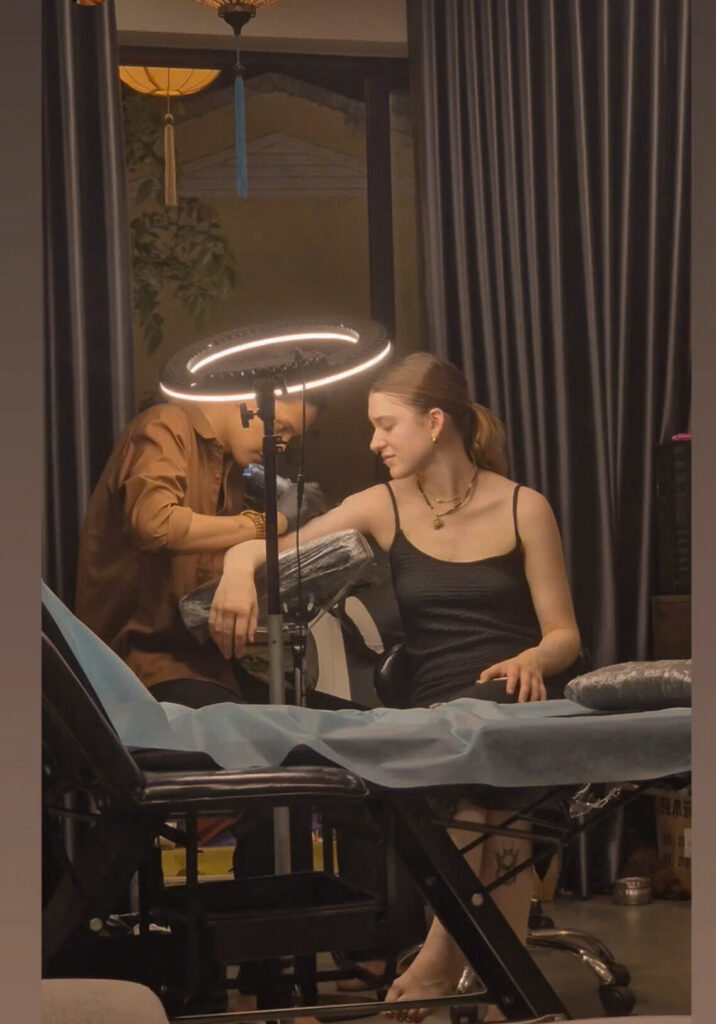
You leave the studio under a breathable waterproof second-skin film. Leave it on. It is doing a better job of protecting the tattoo from Hoi An’s air than anything you can do yourself, and it lets you shower normally.
- Fluid under the film is normal. A cloudy mix of plasma and ink collects beneath it. That is the tattoo healing, not an infection.
- Remove it after 24 – 48 hours, under warm running water. Peel slowly, in the direction of hair growth. Pulling it off dry takes skin with it.
- Wash with clean hands and fragrance-free soap. Lukewarm water, fingertips only, no cloth or sponge.
- Pat dry with a paper towel, then let it air for 10 minutes. This step is where the tropical version differs most from what you may have read — a damp tattoo in this climate is asking for trouble.
- Then a thin layer of the aftercare ointment from your kit. Thin enough that the skin still looks matte, not shiny.
Week one to week four
Wash twice a day, dry properly, and apply a thin layer of ointment two or three times a day — less if the skin looks shiny or feels clammy. Around day three to five it will start to flake and itch. Do not scratch, and do not pick the flakes off; each one you pull takes a small amount of ink with it and leaves a pale patch that needs a touch-up.
Wear loose cotton over it. In this humidity anything tight traps sweat against healing skin, and a waistband or a bra strap sitting on a new tattoo for a week will visibly affect how it heals.
The sea: when you can actually swim again
| Water | Wait | Why |
|---|---|---|
| Hotel pool | 2 – 3 weeks | Chlorine irritates open skin and pulls at fresh ink |
| Sea (An Bang, Cua Dai) | 3 – 4 weeks | Bacteria, salt, and no way to rinse immediately |
| Rivers, rice paddies, waterfalls | 4 weeks | Highest bacterial load of anything you will swim in here |
| Freshwater shower | Immediately | You should be washing it twice a day anyway |
If you are in Hoi An mainly for the beach, book the tattoo for the last two or three days of the trip. It is the single best piece of scheduling advice in this article: a piece done on day one means three weeks of sitting in the shade watching everyone else swim.
How to protect a new tattoo in the first four weeks
Two separate rules, and people conflate them constantly.
- While healing (2 – 4 weeks): no direct sun at all, and no sunscreen either. Sunscreen on broken skin irritates it. Cover the tattoo with loose clothing instead. A sunburn on a healing tattoo can blister, and blistering over fresh ink permanently damages the work.
- After it has healed: SPF 30+ or higher, always. This is not cosmetic advice. UV is what fades tattoos, and it is the only fading factor you control.
The sun, part two: what UV does over the next ten years
Every tattoo fades. That is not a flaw in the work — pigment sits in living skin that turns over, and sunlight degrades the pigment particles in it. What people actually want to know is narrower: which parts go first, how fast, and how much of it they can hold back.
- UV breaks pigment down, and it does not do it evenly. Warm colours absorb more of it, which is why an old colour piece goes blotchy rather than simply lighter.
- Depth decides how fast. Pigment placed deeper is broken down more slowly — which is most of what separates one studio from another: the same drawing, put in at different depths, ages differently.
- Small detail has less to lose. A hairline of grey is a few cells wide, and every tattoo blurs by a fraction of a millimetre as it ages. A bold shape has room to spare; a line does not.
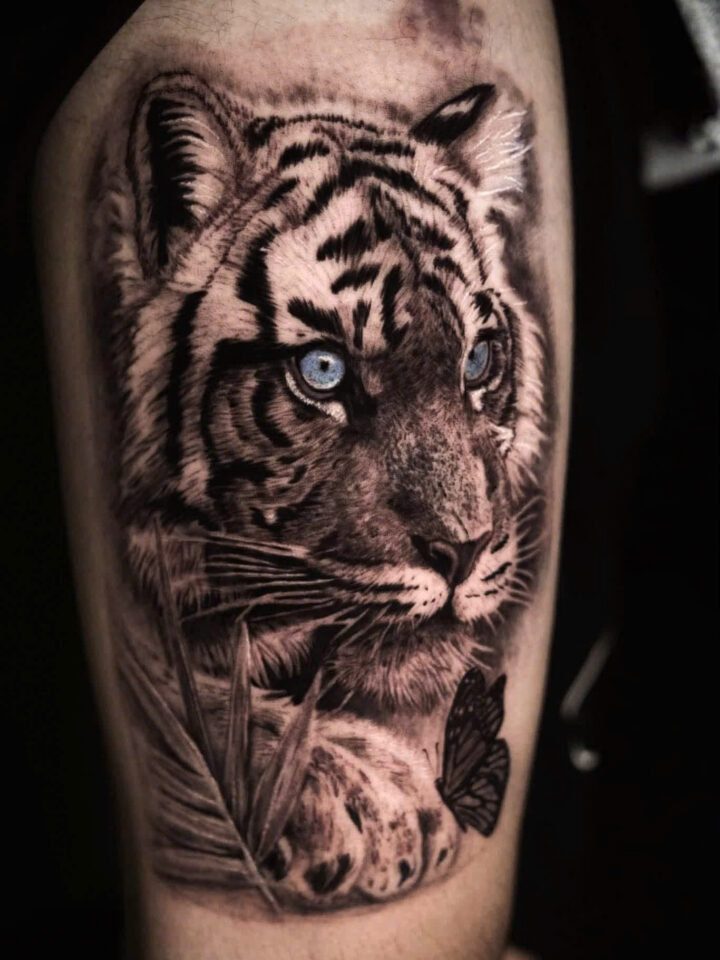
Fine grey detail goes first, then red, then everything else, then black. In practice that means the parts of a piece carrying the information are the parts that leave first: the texture in fur, the gradient across a face, the fine lines in a flower. The structure survives, because it was built from bold shape and negative space. This is why a twenty-year-old black and grey piece can still look deliberate while a ten-year-old piece of fine detail looks soft — the one that lasted was not applied better, it was built with less to lose.
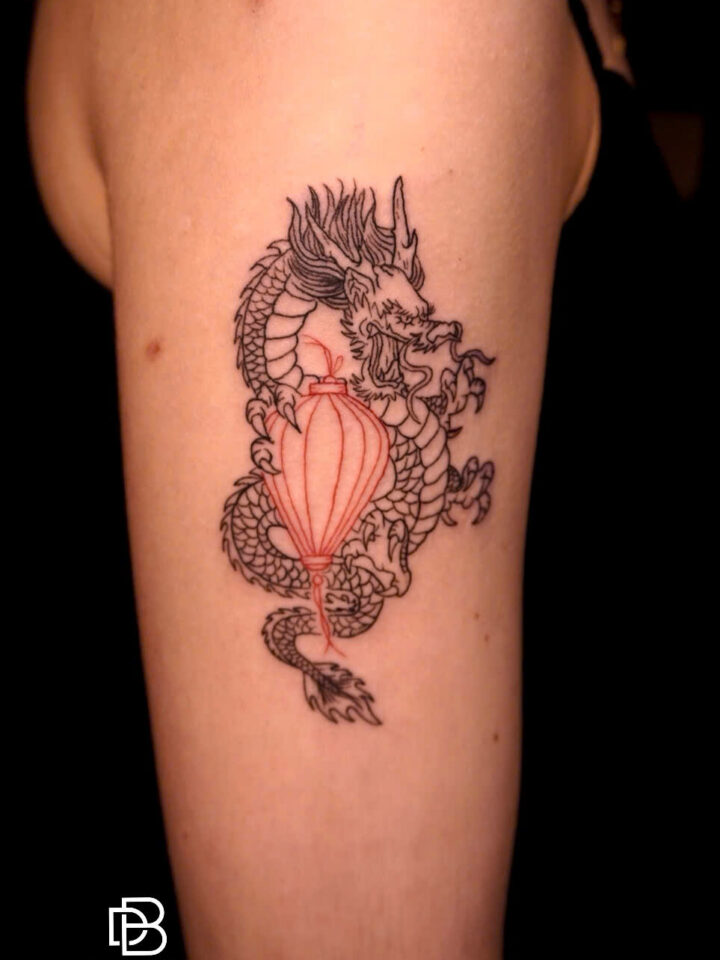
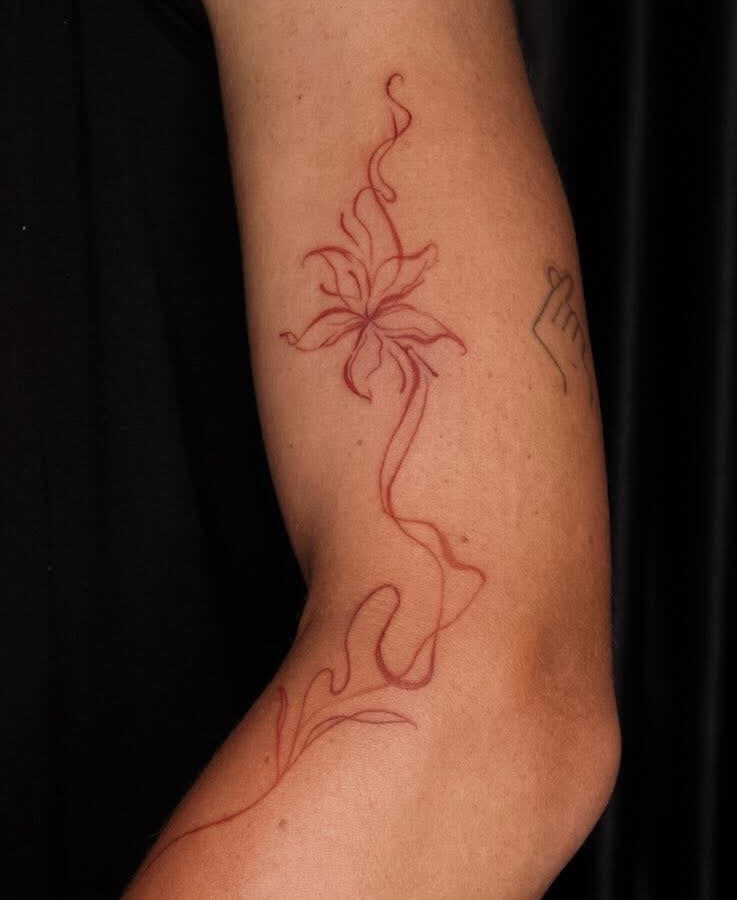
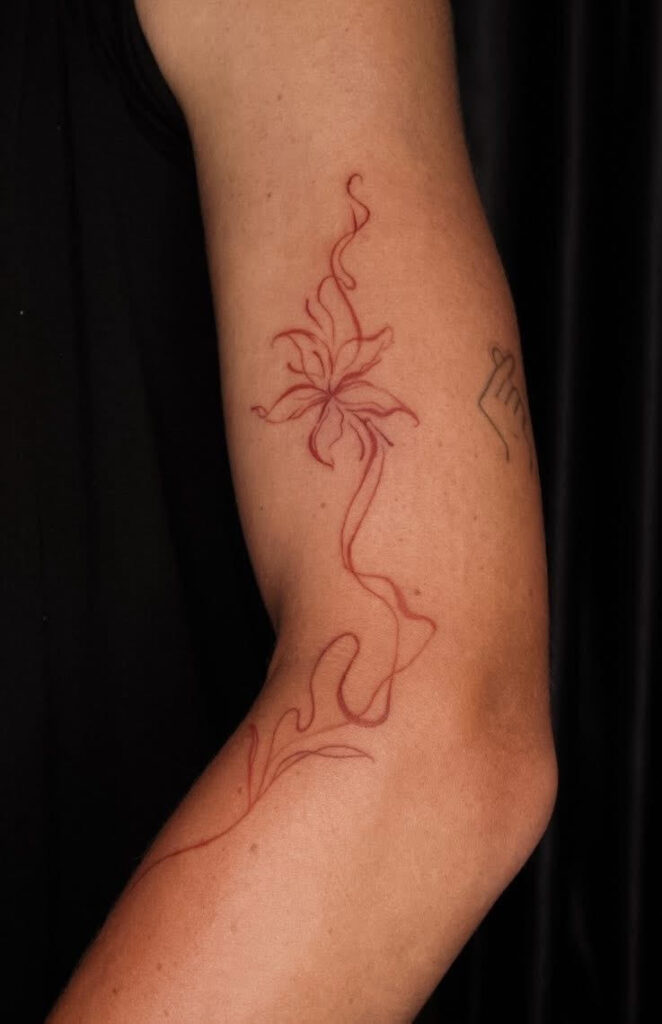
Red is the one people ask about most. Expect noticeable softening in 8 – 15 years, against 20+ for black in the same piece. Red is also the pigment most likely to cause a reaction — most people never have one, but among those who do, red is the usual culprit. Designs where softening reads as ageing rather than as damage suit it best: botanical vines, script, single-line work. Sharp graphic geometry, where the whole point is a crisp edge, suits it worst.
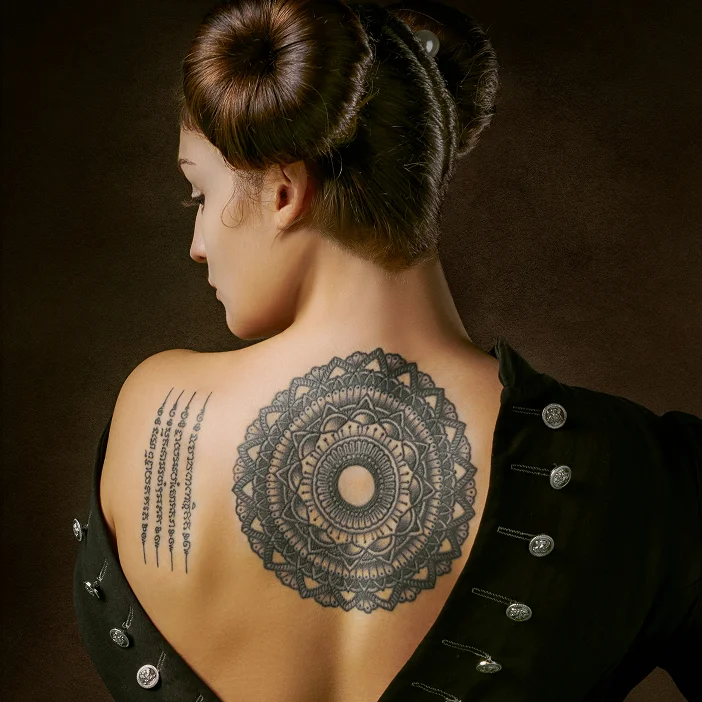
Black and grey is what holds. There is no warm pigment to break down first, so what fades, fades evenly. It also works on every skin tone, because colour sits on top of your complexion and is altered by it, while black and grey does not change hue because of the skin it is in.
Two-colour designs drift. Trash Polka is built on exactly black and red, and the red settles years before the black does. In a piece using twenty colours that would be a detail; in a two-tone composition it changes the balance of the whole thing. The same is true of any design that depends on two colours holding equal weight — plan for the day they no longer do.
Sunscreen, sleeves and placement: the three things that actually protect it
- Placement is the most effective lever, and it is decided before the needle goes in. Shoulders, outer forearms and calves take the most sun. Upper back, ribs, inner arm and thigh take much less. A fine line piece in a covered spot will outlast a bolder one on a shoulder.
- Sunscreen on a healed tattoo, every day. SPF 30 minimum, 50 in the middle of the day here. It is the cheapest thing you can do and the one nobody does.
- Sleeves work. A piece under a shirt for most of the year ages noticeably slower than one that lives in the open.
This is also the honest answer to a question we get before almost every booking: how will this look in ten years? A good artist will answer it specifically — which parts will soften, which will hold, and what they would change if lasting were the priority. If you want red or very fine detail anyway — and both are worth wanting — put them where the sun does not reach, and accept that they will soften before everything else in your collection does.

Sand, insects and the other tropical specifics
- Sand. It gets into a healing tattoo, it is abrasive, and it is not clean. Beach walking in the first three weeks means the tattoo is covered.
- Insect repellent. Not on the tattoo. Around it is fine. DEET on healing skin stings and irritates.
- Motorbikes. A fresh tattoo on a forearm or calf at speed collects dust and sun in equal measure. Cover it or take a taxi for the first week.
- Air conditioning. Helpful — it keeps you from sweating on it. Just do not let the skin get too dry; that is what the thin layer of ointment is for.
- Alcohol. Skip it for 24 hours before and after. It thins the blood, which means more bleeding during the session and a longer heal.
When to actually worry
Redness, warmth, mild swelling and itching in the first week are all normal. Come back and see us, or see a doctor, if you get: spreading redness beyond the tattoo after day three, yellow or green discharge, a smell, a fever, or pain that increases rather than decreases after day two. Infections are rare and entirely treatable when caught early — the mistake is waiting it out because you are on holiday.
Flying home, and the one thing that changes
Flying with a new tattoo is fine. Cabin air is very dry, so apply a thin layer of ointment before boarding and again on landing, keep it covered with loose clothing, and move around so a fresh leg piece is not creased under a seatbelt for eight hours. Once you are home the rules do not change — only the humidity does, and that gets easier. The sun rule does not change at all: sunscreen on it, every day, for the rest of your life.
Questions while you are still here
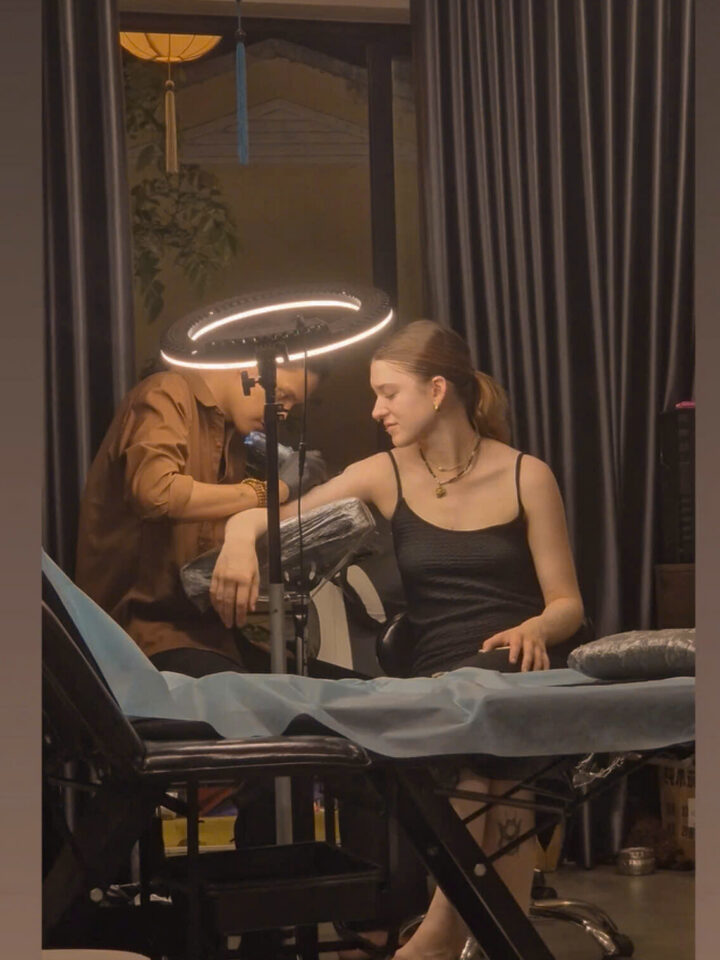
Every client at DanBam leaves with an aftercare kit and written instructions, and you can come back to the studio at 15 Nguyen Hoang, An Hoi any day between 9:00 and 22:00 to have it looked at — no appointment, no charge. If you have already flown home, send us a photo and we will tell you whether what you are seeing is normal. Sizes and prices for the piece you are planning are on the Hoi An price chart.