Vietnamese Traditional Tattoos: History, Meanings & Best Designs in Hoi An
Vietnamese traditional tattooing is two different stories, and they are usually told as one. The first is old and has almost disappeared: tattooing recorded on this coast two thousand years ago, soldiers marked with a two-word pledge before a Mongol invasion, and the face tattoos of Dao women in the northern mountains. The second is happening now, in studios like ours, where travellers ask for the lotus, the dragon and the Hoi An lantern. This article is about the first story — the history that is actually recorded, and where the record runs out.
The short answer
- Is there a Vietnamese tattoo tradition: yes, but not one the average Vietnamese person inherited. The traditions that survived into living memory belong to ethnic minority groups in the northern highlands and the Central Highlands, not to the Kinh majority.
- What people mean by “Vietnamese tattoo” today: a design language built from national symbols everyone in Vietnam recognises — dragon, lotus, phoenix, bronze drum, bamboo, lantern. See the full catalogue of sixteen motifs we are asked for most.
- What it costs: a small fine line motif is a mini piece, 800,000 – 1,200,000₫ (~$32 – $48). Custom realism is 3,750,000₫ (~$150) an hour. Full Hoi An price chart.
- Is it respectful to get one: lotus, bamboo, drum and dragon are shared national symbols — wear them. Highland face-tattoo patterns belong to particular communities and are a different question; more on that below.
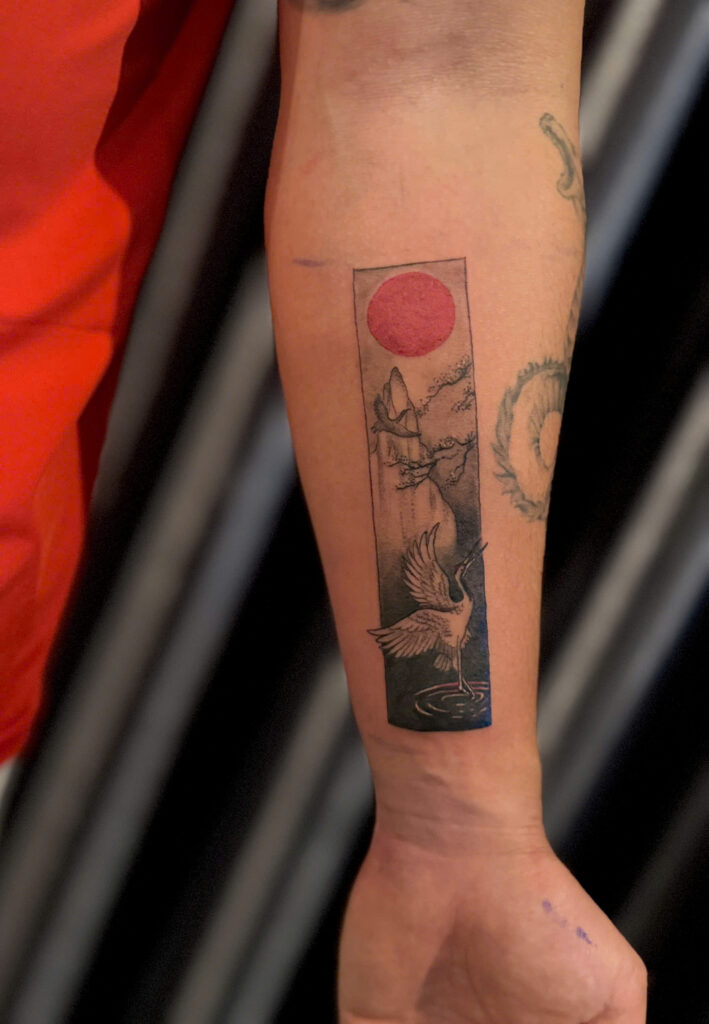
The oldest layer: tattooed to live in the water
The earliest written evidence about tattooing in this part of the world is not Vietnamese. It is Chinese — Han-era records describing the peoples south of the Yangtze, including the Yue groups that the Vietnamese trace ancestry to, as đoạn phát văn thân: hair cut short, body tattooed. The stated reason in those records is practical and specific. These were people who lived on and in rivers and sea, and the marks were believed to keep the water dragon — giao long — from taking them.
Two things are worth taking from that, and one thing is worth refusing to take. Worth taking: tattooing in this region is not a borrowed fashion — it is older than writing about it, and older than most of what travellers get tattooed today. Also worth taking: the marks doubled as a way of knowing who belonged to which group. Worth refusing: these are the observations of officials from an empire that was in the process of absorbing the place. They tell you what an outsider noticed, not how anyone described themselves.
Sát Thát: the tattoo that was a pledge
The one Vietnamese tattoo that most Vietnamese people can name is not decorative at all. In the 1280s, facing three invasions by the Yuan-Mongol armies, the Trần court’s soldiers are recorded as having two words tattooed on their arms: Sát Thát — kill the Mongols. It was a pledge you could not quietly take back, and it is taught in schools as exactly that.
Whether every soldier in the ranks actually carried it matters less than what the story did to the culture. It fixed an idea in place: in Vietnam, a tattoo can be a commitment rather than an ornament. Ask a Vietnamese friend about traditional tattoos and this is the example you will get.
Marks you did not choose
Alongside the honoured tattoos there is a side that explains a lot about modern Vietnam. Tattooing was also used coercively — as a punishment mark on convicts and exiles, a practice shared with imperial China — and men swept into corvée labour or military service could be marked to prevent desertion.
Which means that for centuries, in the Kinh majority culture, a tattoo was often something done to you by the state rather than something you chose. Read that against the Confucian body conventions that dominated the literate class and you get the situation that still exists: “traditional Vietnamese tattoo” is a strange phrase to most Vietnamese people under sixty. The history is real — it simply belongs to other people’s grandparents.
Where the traditions did survive: the highlands
The tattoo traditions that lasted into living memory are not Kinh traditions. In the northern mountains — Hà Giang, Lào Cai, Lai Châu — Dao (Mien) women tattooed their faces, starting in adolescence and continuing over several sittings. Several Tày and Nùng communities tattooed too, and in the Central Highlands, groups including the Êđê and M’nong used tattooing as a coming-of-age mark, some on the face and some on the body.
Ask why, and you will not get one answer. The explanations recorded for Dao face tattooing include a mark of adulthood and beauty, protection from being taken — by men in some tellings, by spirits in others — and a way of being recognised by ancestors after death. All of these are oral traditions, and the practice has essentially stopped: the last tattooed Dao women are now elderly, and their grandchildren are not tattooed. Anyone who gives you a single confident reason for all of Vietnam is guessing.
The revival: what travellers actually ask for
What is tattooed as “Vietnamese” in Hoi An today is not a heritage practice handed down. It is a design language assembled from symbols every Vietnamese person recognises instantly, and it is barely twenty years old as a tattoo vocabulary. The six families below cover most of what walks through the door — the full sixteen motifs are on the Vietnamese tattoo page.
| Motif | What it carries | Where it works |
|---|---|---|
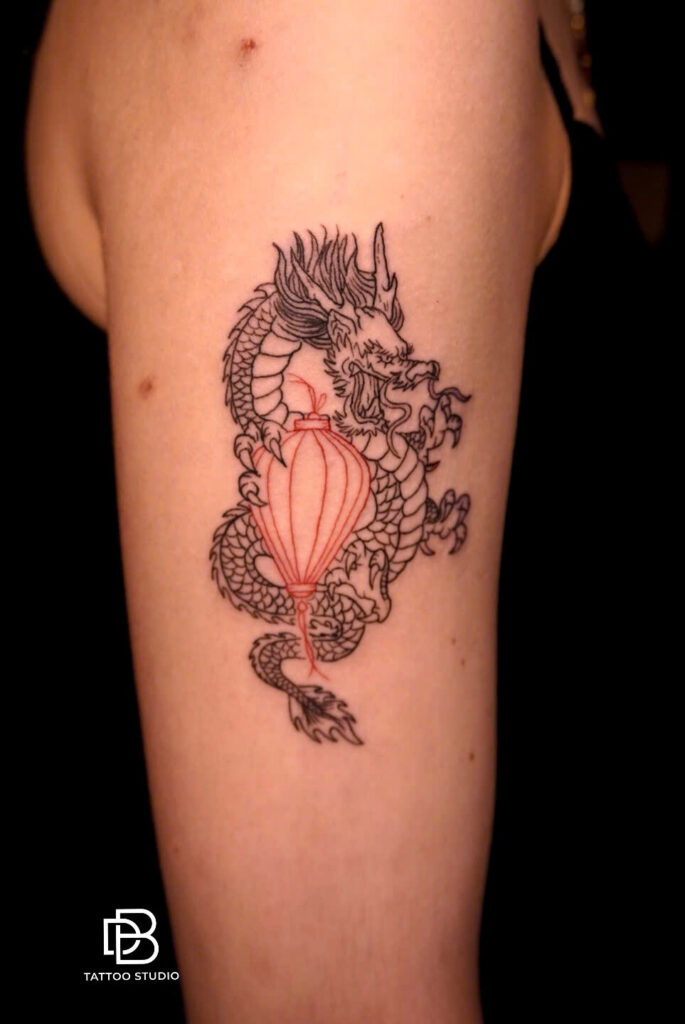
| Rồng — the dragon | Power, rain, ancestry. The Lý-era dragon is slender and wave-like rather than the heavy beast of later centuries. | Forearm, calf, an armband that wraps |
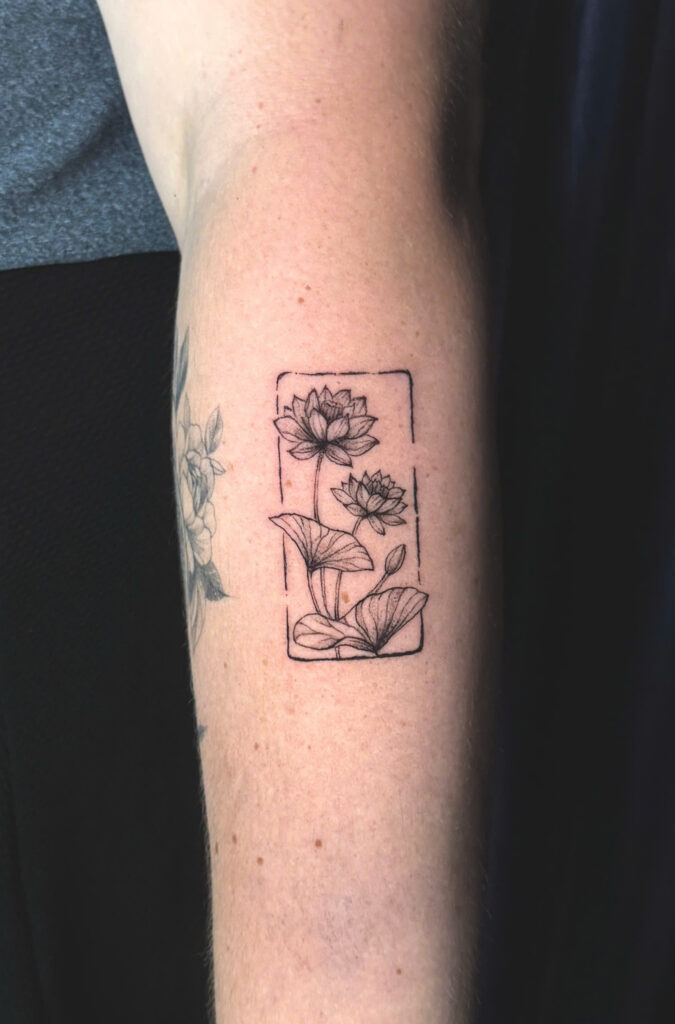
| Hoa sen — the lotus | Vietnam’s national flower and a Buddhist emblem. It comes up out of mud and comes up clean. | Forearm, ankle, behind the ear |
| Trống đồng Đông Sơn — the bronze drum | A sun at the centre with rings of dancers and herons around it. The oldest Vietnamese pattern still being tattooed. | Band around a forearm or calf |
| Cá chép hóa rồng — carp becoming dragon | The fish that climbs the falls and transforms. Study, persistence, a hard thing finished. | Forearm, calf, ribs |
| Tre — bamboo | It bends and does not break. The hedge around every old village. | Vertical, down a forearm or spine |
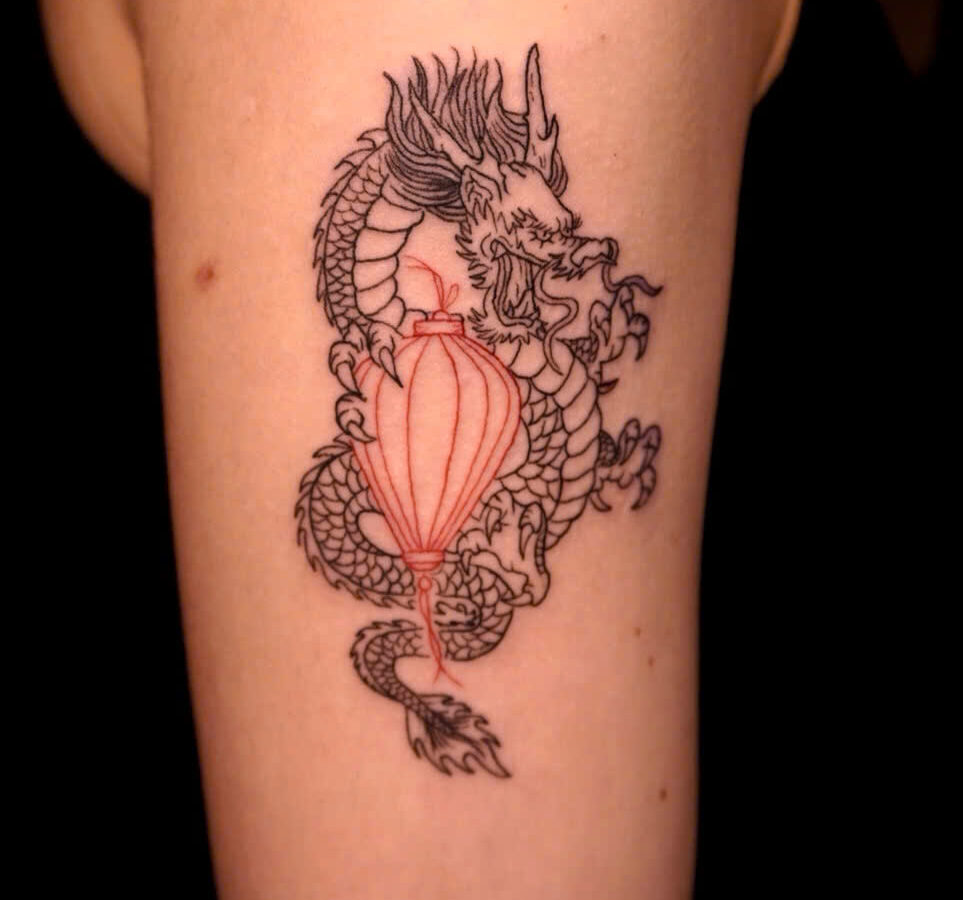
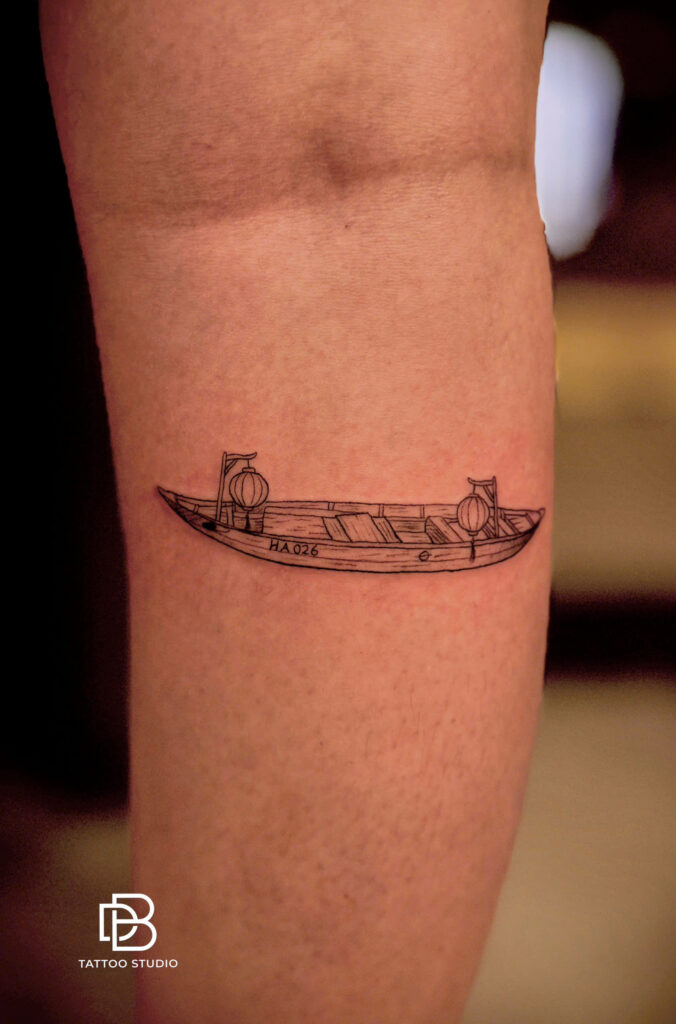
| Đèn lồng Hội An — the lantern | Silk over bamboo, the old town after dark. Hoi An’s own motif. | Wrist, ankle, thigh |
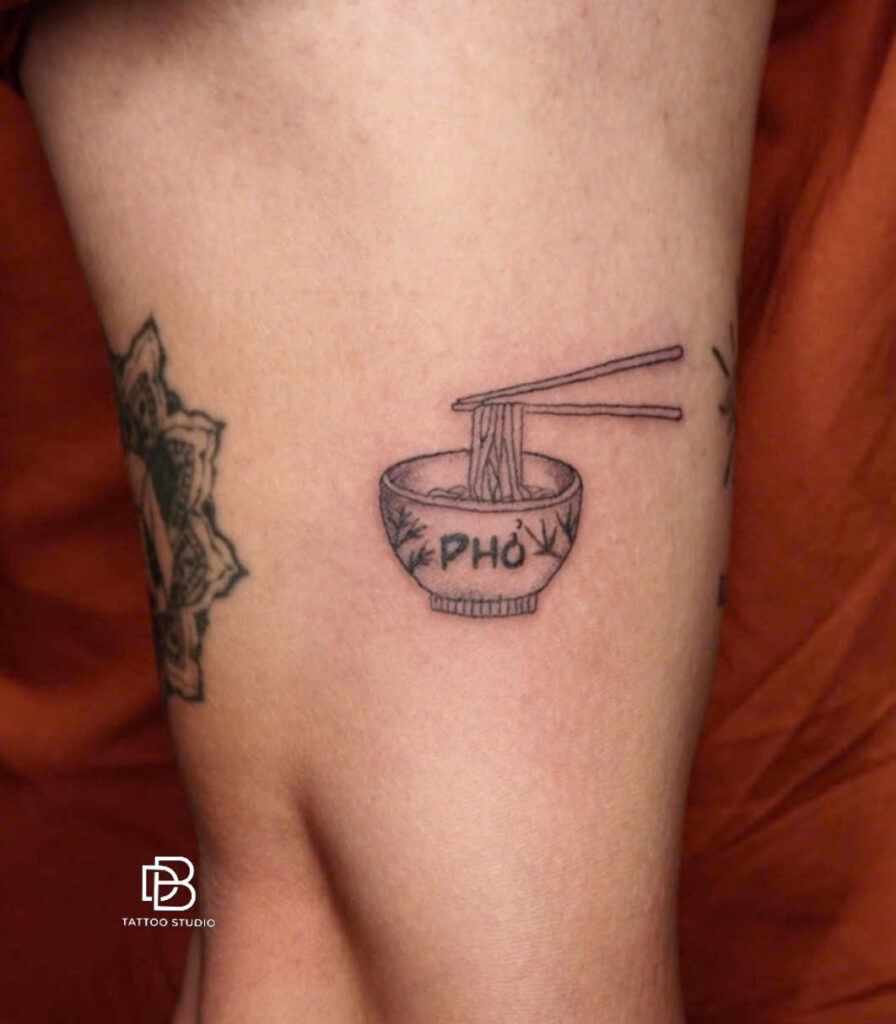
The rest of the list is deliberately unheroic: the nón lá conical hat, the sampan, a bowl of phở, a plastic stool, the Japanese Covered Bridge. Travellers who have spent two weeks here ask for these more often than they ask for dragons, because a bowl of noodles you ate every morning is a truer souvenir than a symbol you looked up yesterday.
Vietnamese dragon, or the dragon you already know
If you are going to wear one, it is worth asking for the right one. The rule of thumb you will hear across East Asia is three claws for Japanese dragons and four or five for Chinese — but the more useful difference for a tattoo is the body. Vietnamese dragons from the Lý and Trần dynasties are drawn wingless and serpentine, with a smooth wave in the body and a raised head, closer to the stone carvings at the temples here than to either the Japanese or the Chinese dragon. Ask for a Vietnamese dragon and you should get one long flowing creature — not a fanged warrior with bat wings.
Getting one that is still yours
There is a line here, and it is not the same line for every motif.
- Shared national symbols — take them. The lotus, bamboo, the bronze drum, the carp, the lantern, the Vietnamese dragon: these belong to the whole country. Nobody will look twice at a traveller wearing a lotus, and the motifs were never anyone’s private property.
- Specific highland patterns — ask first, and expect a no. A Dao face-tattoo pattern is not a minimalist design that happens to be old. It belongs to a particular community, it was worn for particular reasons, and the last women who carry it are still alive. Copying it because the geometry looks good is the same mistake as wearing a Maori band you cannot explain.
- Symbols with a religious life — know what you are copying. A Buddhist lotus is safe. A specific temple’s guardian figure, or a motif that belongs to a shrine, is worth asking about before it goes on skin, not after.
None of this requires turning a tattoo into a research project. It requires one question at the consultation: what does this mean, and who does it belong to? An artist who cannot answer that for the motif they are drawing is not the right artist for this piece, and the same seven checks apply to a lotus as to anything else.
What it costs and how it heals here
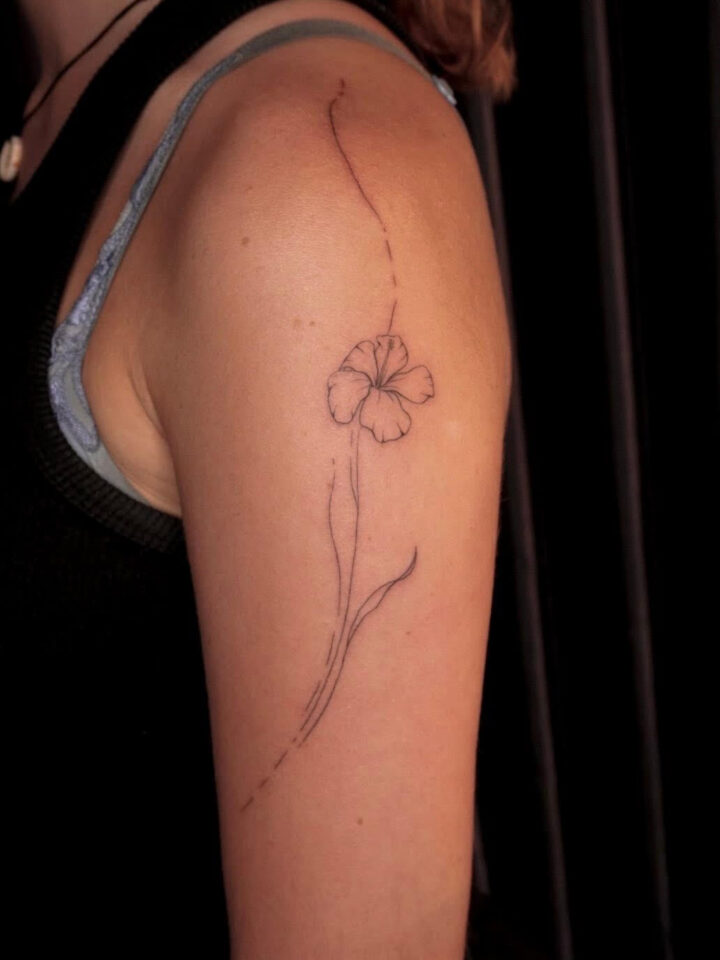
Vietnamese motifs suit fine line and blackwork particularly well — the lotus, bamboo and lantern are built from clean single lines, and the bronze drum is a band by nature. That also makes most of them cheap and fast by comparison with a realism piece:
- Small fine line motif (lotus, bamboo, lantern): a mini piece, 800,000 – 1,200,000₫ (~$32 – $48), 30 – 90 minutes. Full price breakdown.
- Larger linework, dragon or phoenix: 2,000,000 – 3,500,000₫ (~$80 – $140), usually a single sitting.
- Custom realism or colour: priced at 3,750,000₫ (~$150) per hour, so a full forearm project is a multi-session decision.
- Healing: the small pieces are the easiest thing to heal in this climate, but the rules are the same — no sea or pool for the first weeks, no direct sun, and the humidity means keeping it drier than you would at home. See the tropical aftercare guide.
Where to get one in Hoi An
DanBam Tattoo is at 15 Nguyen Hoang, An Hoi — across from the Night Market, two minutes from the Japanese Covered Bridge — open daily 9:00 to 22:00. The artists speak English, needles are unsealed in front of you, and the price is fixed in writing before the machine starts.
Send a reference photo and tell us where you want it, and you will have an exact quote back in a couple of minutes — free, and with no obligation to book. If you are still choosing, start with the sixteen Vietnamese motifs, or the lantern tattoo ideas if the old town is what you came for.